

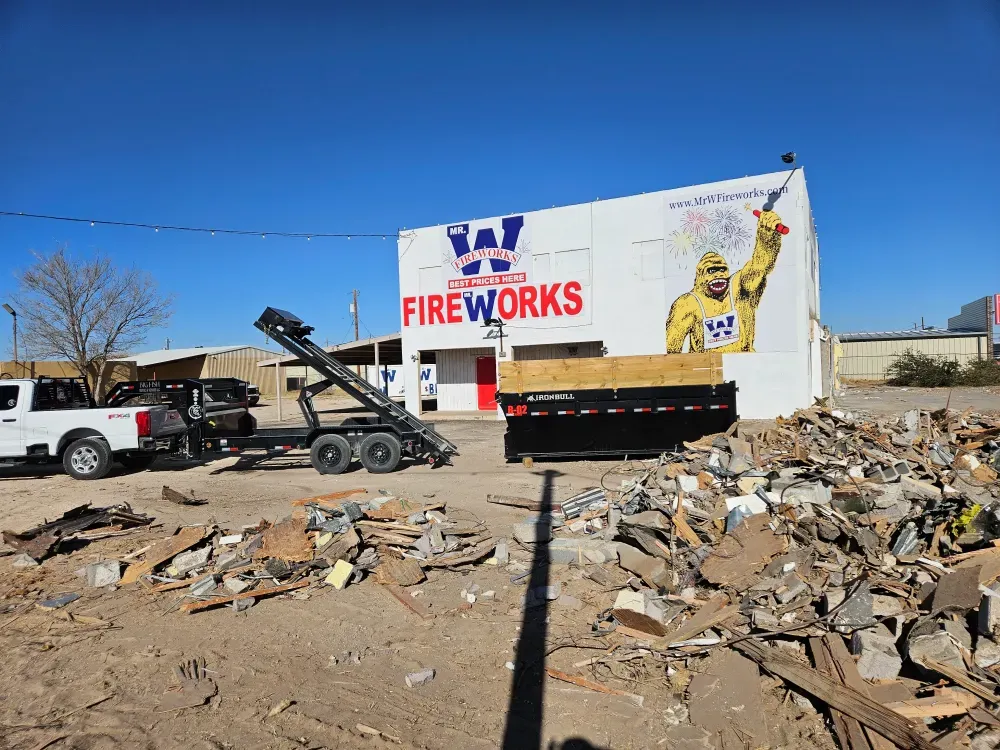
Demolition Dumpster Rental in Odessa, TX
Big Fish Rentals & Services LLC supplies containers for teardown debris, plus equipment for the concrete and dirt a roll-off can't legally haul. We cover Odessa, Midland and the towns around them.
Demolition Dumpster Rental Starts With the Material
The first thing we sort out on a teardown is material. A teardown makes four or five kinds of debris at once. Wood and drywall go in the container. Concrete and dirt don't.
- We ask what the structure is made of before sizing anything
- Mixed debris in the roll-off, heavy aggregate on a dump truck
- Containers swapped as the teardown moves forward
- Same-day delivery, so the machine isn't sitting idle
Teardowns come in every size around here, from an interior strip to a whole outbuilding. The equipment list changes with the structure, and so does the number of containers.
- Interior demo: drywall, framing, flooring and fixtures
- Structure teardowns: sheds, garages and small outbuildings
- Mobile home and trailer removal: mixed material, high volume
- Fire and water damage cleanouts: heavy, dirty and usually on a deadline
- Slab and concrete removal: dump truck and skid steer, not a roll-off
- Site clearing: brush, old fencing and scrap
On a full teardown the roof material coming off first often fills a box on its own. That happens before the walls come down.
The Heavy Material a Roll-Off Cannot Legally Haul
This is the question that stops demo jobs cold. Concrete, dirt, brick and heavy aggregate can't ride in a roll-off container. The City of Odessa waste ordinance names the same list for city containers. That list is rock, brick, broken concrete, dirt, plaster, sand and gravel.
Knowing that before the slab comes up is the difference between a plan and a problem.
- Concrete, brick and block: dump truck
- Dirt, sand and gravel: dump truck
- Tires: not accepted
- Wet paint and hazardous material: not accepted
- Asbestos: not accepted, and separate state rules apply
None of that stops the job. It moves the heavy half onto different equipment. We haul concrete, dirt and heavy aggregate on a dump truck, with a skid steer available to load it.
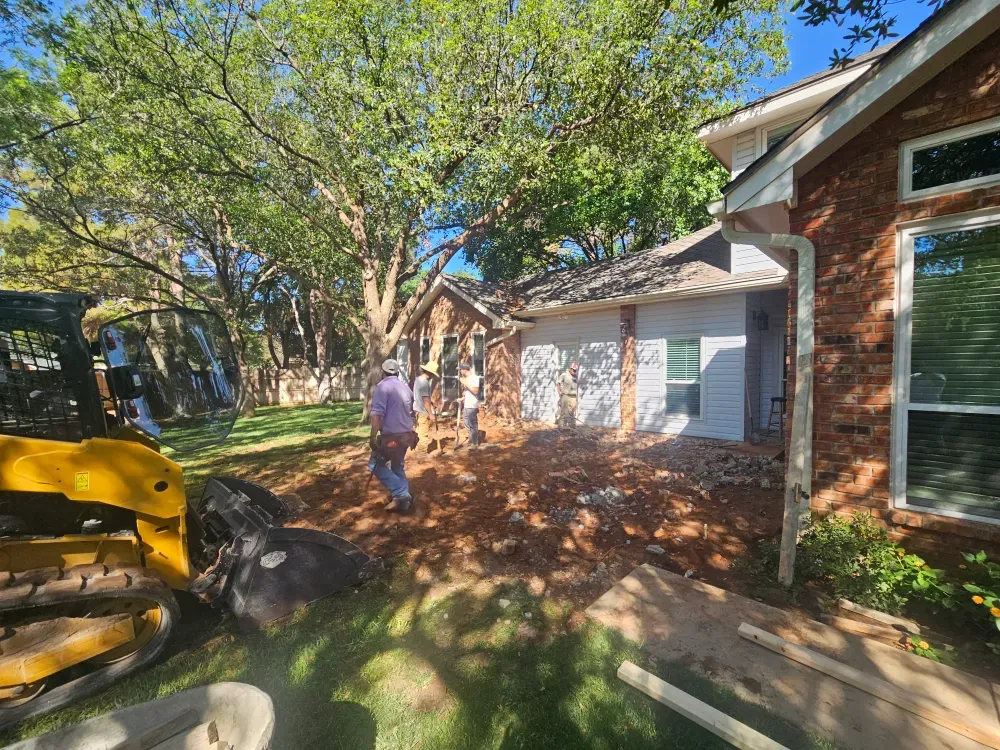
Avoiding Debris Bottlenecks on Teardowns
A teardown moves fast until it doesn't. The thing that stops it is almost never the structure. It's a full container, and nowhere to put the next load.
Separating Material Before You Start
Wood, drywall and general debris go in the container. Aggregate and soil go on a truck. Metal is often worth pulling aside on its own.
- Container: lumber, drywall, roofing, flooring, fixtures
- Dump truck: concrete, brick, dirt, sand and gravel
- Set aside: copper, steel and other scrap worth keeping
Why Demo Debris Runs Heavy
Plaster, tile, old lumber and roofing all weigh more than they look. Two tons come with the box, and overages are billed.
On a teardown that makes the sizing conversation matter more than on almost any other job. Tell us what the walls are made of and it gets right the first time.
Sequencing Containers Through the Job
Interior strip first, then the structure, then site clearing. Each phase throws a different debris profile.
- Interior strip: drywall, cabinets, flooring, fixtures
- Structure: framing, roofing, siding
- Site clearing: brush, fencing and leftover scrap
We swap the container between phases so nothing waits on a full box. Crews rolling straight into a rebuild often need a second container for debris from an active build.
Older Structures, Older Materials
A lot of Odessa’s building stock predates the mid-1980s. That means plaster, old framing and materials worth a look before anything comes down.
Anything suspected of containing asbestos stops the job until it's assessed under state rules. We do not test it, we do not abate it, and we will not haul it.
Access for the Truck and the Machine
A teardown site has to be reachable by a loaded truck, not just an empty one. If a skid steer is coming, it needs room to turn and load.
Fencing, power drops and soft ground all change the plan. Walk the access with us on the phone and the delivery goes clean.
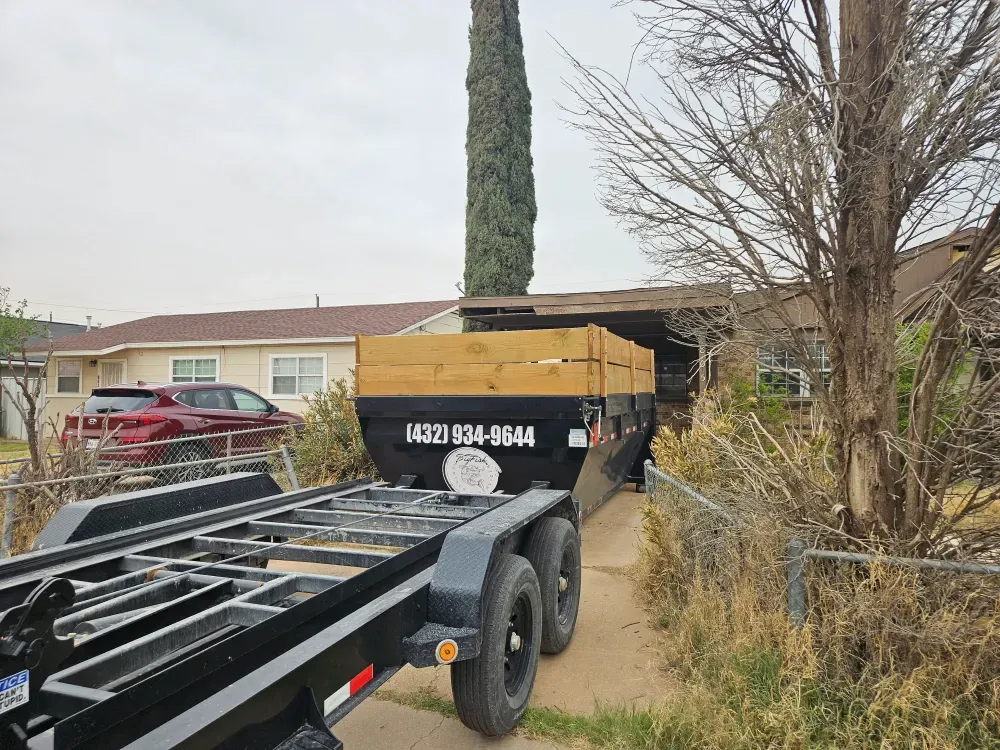
When the Crew Loads It for You
Full-service loading is available on demo work, not just a container drop.
- Hand-loading interior debris after the strip
- Clearing the pile once the structure is down
- A final pass over the site before the walkthrough
If you're short-handed, let the crew do the loading and keep your people on the machine.
Mixed demo debris and heavy aggregate both get handled, each on the equipment that can legally take it. Containers are sized for what the material weighs rather than how tall the pile stands.
Swaps get arranged as the teardown moves from phase to phase. Same-day delivery keeps a rented machine working instead of idling next to a full box.
Loading help is there when the crew is thin. Older Odessa structures come apart differently from newer ones, and the sizing reflects that. Jobs in Crane, Kermit and West Odessa get the same schedule as jobs in town.
How Demolition Debris Removal Works
- Call with the structure and the scope. What it's made of, and how much is coming down.
- Split the material. Container debris on one side, heavy aggregate on the other.
- Size the container and the truck. Weight drives both.
- Deliver, often the same day. Payment is collected before the drop.
- Swap through the phases. Hauling and disposal handled start to finish.
Demolition Crew Reviews
The rating stands at 5.0 stars from 50+ Google reviews.
Demolition Dumpster Rental Frequently Asked Questions
How do I get rid of demolition debris?
Split it in two. Wood, drywall, roofing and fixtures ride in a roll-off. Concrete, dirt and aggregate ride on a dump truck. The container covers the first half, and the equipment covers the second.
Can I put construction and demo debris in the same container?
Yes. Mixed loads are normal on a teardown and nothing needs sorting on site. The exceptions are the heavy and banned materials, which stay out of every box.
Can concrete go in a dumpster?
No. Broken concrete is too heavy for a roll-off and is named on the city’s excluded list. It moves on a dump truck instead, with a skid steer available to load it.
What about dirt from the site?
Same answer. Soil, sand and gravel don't go in a container. They ride out on a dump truck, so a graded site is still a one-call job.
What size do I need for a teardown?
Size it by material weight and by phase, not by square footage. A plaster interior strip runs heavier than a framed shed. Tell us the structure and we pick the right container size with you.
What if the building might have asbestos?
Stop and get it assessed under state rules. Asbestos isn't accepted in any container, and it's not something we test or abate. Once it's cleared by the right people, the rest of the debris moves normally.
Is there a weight limit on a demo container?
Two tons are included, and weight beyond that is billed as an overage. Plaster, tile and old roofing hit it fastest. That's why the material question comes before the size question.
Can your crew load the debris?
Yes. Full-service loading is available for interior strips, post-teardown piles and final site cleanup. Say how much help you need when you book the container.
How fast can you get a container to a demo site?
Same day in most cases, and often within hours. The phone is answered in minutes at any time of day. Weekends and holidays are no different.
Get a Teardown Container and a Plan for the Concrete
Your teardown container comes with the heavy material handled too. Tell us what's coming down and what it's built from.